

With the rise of cloud storage, lightning-fast SSDs, and powerful NAS systems, many users are questioning whether hard disk drives (HDDs) still hold any real value in 2025. It’s easy to assume that newer technologies have made HDDs obsolete. Still, the reality is far more nuanced, especially for people who deal with large amounts of data or rely on network-attached storage (NAS) for backups, media streaming, or business continuity.
In this guide, we explore modern storage options, compare HDDs with SSDs and cloud services, and analyse how well HDDs still perform in today’s digital landscape. We also look at how platforms like UGREEN NASync keep hard drives not only relevant but highly effective in 2025, even as newer storage innovations continue to evolve.
Overview of Modern Storage Options
Digital storage has expanded in both scale and complexity. Before assessing whether HDDs are still worth buying, it’s important to understand the main storage technologies available today: HDDs, SSDs, and cloud storage.
Hard Disk Drives (HDDs)
HDDs have existed for decades and remain widely used for personal, professional, and enterprise storage. They store data on spinning magnetic disks, making them mechanical devices. Although their performance can’t match SSDs, they remain unmatched in terms of:
-
Storage capacity per TB
-
Long-term data archiving
-
Price per GB
HDDs also come in versions optimised for NAS use, often referred to as “NAS drives” or cold storage drives, which are built for 24/7 workloads and increased reliability.
Solid State Drives (SSDs)
SSDs are far faster because they store data on flash memory chips with no moving parts. They offer:
-
Ultra-fast read/write speeds
-
low latency
-
better resistance to shock and vibration
-
reduced power consumption
SSDs excel in performance-heavy tasks such as:
-
video editing
-
database hosting
-
virtual machines
-
high-performance NAS pools
Their main drawback remains the price. HDD vs SSD cost comparisons still show a significant price difference per TB, making SSDs great for speed but costly for bulk storage.
Cloud Storage
Cloud platforms store your data on remote servers maintained by companies like Google, Apple, and Microsoft. Benefits include:
-
Accessibility from any device
-
automatic syncing
-
built-in redundancy
However, cloud storage comes with drawbacks:
-
Recurring subscription costs
-
limited control over privacy
-
slower upload speeds
-
reliance on internet connectivity
For users with large media libraries or sensitive data, cloud storage alone is often insufficient or too expensive in the long term.
Are Hard Drives Still Worth It in 2025?
Despite rapid advances in SSDs and cloud solutions, HDDs continue to play an essential role, especially when paired with NAS technology.
Cost Advantage
HDDs remain the cheapest storage medium available, especially for multi-terabyte needs. In 2025, the average cost per TB for HDDs is still significantly lower than SSDs, making them ideal for:
-
Large photo/video collections
-
surveillance footage
-
family backups
-
business archives
-
RAID-based NAS systems
Demand for Bulk Storage
UK households and small businesses are generating more data than ever:
-
4K and 8K video recordings
-
high-resolution smartphone photos
-
large project files in creative industries
-
increasing compliance requirements for long-term archiving
HDDs are the most cost-effective choice for this type of high-volume storage.
NAS Compatibility
When paired with NAS systems, HDDs gain even more value through:
-
RAID redundancy
-
multi-bay expansion
-
centralised access
-
remote availability
-
dramatically improved reliability
In this context, HDDs remain absolutely relevant in 2025.
Pros and Cons of HDDs in 2025
To understand their role today, we must examine HDD strengths and weaknesses relative to SSD and cloud storage.
Advantages of Hard Drives
1. Lowest Storage Cost per TB
HDDs offer the best cost efficiency for storing large volumes of data. A 12TB or 16TB HDD is still significantly cheaper than an SSD of the same size.
2. Ideal for NAS Expansion Bays
NAS devices with multiple bays allow users to increase capacity gradually. HDDs make this scalable and affordable.
3. Suited for Long-Term Data Archiving
Mechanical drives are excellent for retaining large amounts of infrequently accessed data. Cold storage drives, in particular, are built for longevity.
4. Perfect for Media Library Storage
High-volume libraries of films, music, and photos do not require SSD speeds, making HDDs the most practical choice.
5. Benefit From RAID Arrays
RAID systems improve redundancy, speed, or both. HDD-based RAID remains a cost-effective option, especially for home and small business NAS storage.
Disadvantages of Hard Drives
1. Slower Than SSDs
Even with NAS optimisation, HDDs cannot match the performance of solid-state storage.
2. Mechanical Wear
Being mechanical devices, they are more vulnerable to physical degradation.
3. Higher Power Consumption
HDDs consume more energy, which can be relevant in large deployments.
4. Noise and Vibration
Although modern drives have improved, they still generate noise that SSDs do not.
Real Use Cases in UK Homes and Small Businesses
HDDs remain highly relevant in real-world scenarios—especially when part of a NAS storage system. Here’s how different environments benefit from HDDs in 2025.
UK Home Scenario
Many UK households now adopt home NAS setups as alternatives to cloud subscriptions. A NAS with HDDs allows families to:
-
Store thousands of high-resolution photos and videos
-
stream films directly from their media library
-
back up devices over the network
-
Create a private cloud accessible from anywhere
For these use cases, HDDs offer unbeatable value. With NAS devices supporting automatic RAID, users gain additional safety and convenience at a low cost.
Small Business Scenario
Small businesses often require secure, scalable, and affordable server NAS storage. HDDs are ideal for:
-
document archives
-
client data retention
-
compliance and regulatory storage
-
project folders shared across teams
-
backup jobs and cold storage
Businesses often pair HDDs for capacity with SSDs for performance, creating a cost-efficient hybrid solution.
How NAS Storage Keeps HDDs Relevant
Network-attached storage transforms HDD performance by providing an environment tailored for consistent workloads, backup storage reliability, and multi-user access.
NAS Enhancements for HDDs
1. RAID Array Benefits
RAID significantly improves HDD reliability, offering protection against drive failure.
2. SSD Cache Support
NAS devices can combine HDD capacity with SSD caching to boost performance for frequently accessed files.
3. Multi-Bay Flexibility
NAS expansion bays allow users to scale their storage as needed without replacing existing drives.
4. 24/7 Operation
NAS-rated HDDs are designed for continuous use, making them ideal for long-term, always-on storage systems.
Hybrid NAS Setups
A modern NAS system often includes:
-
HDDs for affordable bulk storage
-
SSDs for speed-critical workloads
This balanced approach makes HDD-based NAS configurations practical and future-proof.
UGREEN NASync: Making HDD Storage Powerful in 2025
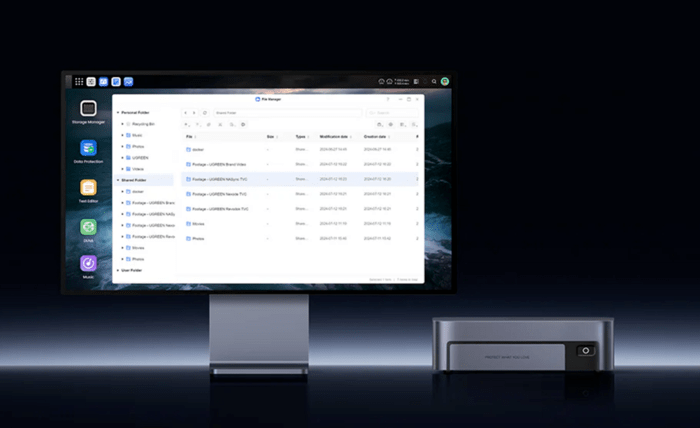
The UGREEN NASync Series is designed to bring out the best in both HDD and SSD storage. Whether you’re storing large media collections or running demanding workloads, NASync provides a versatile and modern platform.
Key Strengths of UGREEN NASync for HDD Users
1. Multi-Bay Flexibility
UGREEN systems offer generous NAS expansion bays, letting users add multiple HDDs and scale up affordably.
2. RAID Management
Simple RAID configuration tools make it easy for beginners to set up redundancy or speed-optimised arrays.
3. Efficient Cooling
Advanced cooling systems protect HDDs during long-term operation and improve their lifespan.
4. High-Speed Networking
UGREEN NASync supports multi-gigabit speeds, enabling smoother streaming and faster backups, even with HDD-based pools.
5. Ideal for Home and Small Business Storage
Whether used for backups, long-term archiving, media libraries, or collaborative workspaces, NASync systems deliver balanced performance and practicality.
Spotlight on UGREEN NASync DXP480T Plus
The DXP480T Plus is designed for high-speed M.2 NVMe SSDs but integrates seamlessly with HDD-based storage using expansion and hybrid configurations. It’s perfect for users who want:
-
SSD-level speed for active files
-
HDD-level capacity for long-term storage
-
A flexible NAS drive that adapts to changing workloads
This makes it suitable for both enthusiasts and small businesses who want performance without sacrificing storage capacity.
Conclusion: Are Hard Drives Still Worth It in 2025?
Absolutely, hard drives remain highly valuable in 2025, particularly for users who need large amounts of affordable storage. While SSDs and cloud platforms dominate conversations about speed and convenience, HDDs continue to offer unmatched cost efficiency and long-term storage capacity. When paired with a modern NAS system, they become even more powerful, benefiting from RAID protection, hybrid caching, and centralised access.
For UK homes and small businesses that handle large media libraries, backups, or compliance data, HDDs remain the most sensible and scalable choice. And with flexible platforms like UGREEN NASync, users can combine HDD capacity with SSD performance to create a balanced, future-ready storage solution tailored to their needs.