

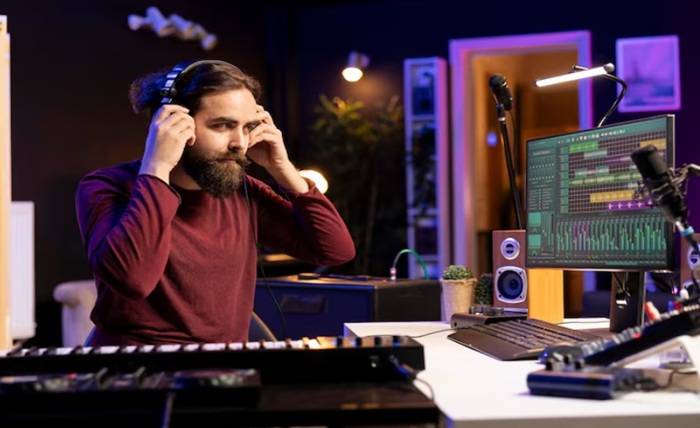
For independent musicians and emerging artists, the path to building an audience has fundamentally shifted. A decade ago, getting your music heard meant getting radio play, which meant having connections or a record label backing you. Today, anyone can upload music to Spotify, Apple Music, and YouTube. Distribution is solved.
But distribution isn’t visibility. Millions of new songs are released every day. The real challenge is standing out in that overwhelming noise and getting people to actually listen to your music rather than the endless alternatives competing for their attention.
The surprising truth is that music discovery now happens largely through visual platforms. TikTok, Instagram, and YouTube Shorts drive massive music discovery. A song that goes viral on TikTok gets millions of listens on streaming platforms. Artists who understand this shift and invest in visual content alongside their audio output build audiences significantly faster than those who just release songs and hope they get discovered.
Yet creating compelling visual content for music is seemingly outside the wheelhouse of most musicians. You’re a songwriter, a producer, a performer—not a videographer or visual artist. Creating music videos traditionally requires budget, professional equipment, and collaboration with video specialists. This creates a significant gap between the necessity of visual content and the ability of most independent artists to actually produce it.
Why Visual Content Matters for Music Artists
The music industry has learned through billions of data points that visual content drives engagement and discovery in ways audio alone cannot. Spotify playlists get people listening, but they don’t create the kind of discovery momentum that visual content generates. An Instagram Reel featuring a song can introduce that track to millions of people in ways that a Spotify playlist never will.
Consider how music discovery actually happens for Gen Z and younger millennial audiences. These demographics don’t search for music on Spotify and gradually work through recommendations. They discover music through social media. A song appears in a TikTok video they’re watching. They like it. They look it up. They follow the artist. They listen to the full album. The visual content was the entry point, not the destination.
This means that independent artists who want to build audiences need to treat music promotion as a multimedia activity. You need great music, absolutely. But you also need compelling visual content that makes people curious enough about the audio to actually listen.
The traditional solution was to hire a music video production company to shoot professional videos. But a proper music video—something in the 3-5 minute range with narrative and production value—costs $2,000-$10,000 to produce. Most independent artists can’t afford that, especially early in their careers when they need to invest in recording, mixing, and distribution.
Short-Form Visual Content as the Solution
Here’s where the nature of music discovery on social platforms creates an unexpected advantage. You don’t need a three-minute music video that costs ten grand. You need 15-second visual content that costs almost nothing to produce and can be distributed across multiple platforms to drive music discovery.
These short-form videos don’t have to tell a story or present a complete artistic vision. They just need to be compelling enough that someone scrolling through TikTok or Instagram pauses, watches, and then follows up by listening to the actual song. The goal isn’t to create art—it’s to create a gateway between visual discovery and audio listening.
This is where AI video generation becomes genuinely transformative for musicians. Instead of hiring a videographer to create music videos, you can create multiple short-form pieces that collectively drive far more discovery than a single traditional music video would.
The Basic Approach
The workflow is practical and doesn’t require any special skills beyond what you already have. You likely already have a smartphone with a decent camera. Use it to capture visual elements that relate to your music. If you’re a singer, film yourself performing, singing, or just existing in an aesthetically pleasing way. If you’re a producer, film your equipment, your creative space, your hands on a keyboard or mixing board. If your music has a particular vibe or aesthetic, capture visual elements that reflect that mood.
You don’t need professional production value here. Authentic, honest visuals often perform better than overly polished footage anyway. Artists with genuine personality and style tend to build more loyal audiences than those trying to mimic commercial production values they can’t actually execute.
Upload these video clips along with your audio track to Seedance 2.0 and describe the visual narrative you want to create. For example: “Show hands performing on a keyboard while the music plays, then transition to a close-up of the artist singing, then pull back to show the full studio setup. Make it feel creative and energetic.” The AI generates a polished 15-second video that combines your footage with the audio and motion that makes the visual compelling.
Distribution Strategy
A single music release can generate 15-20 different short-form videos, each emphasizing different aspects of the song, the artist, or the creative process. One video might be a performance clip. Another might be behind-the-scenes studio footage. Another could be the artist reacting to a recording. Another could show the creative space or inspiration.
Each of these videos gets distributed to TikTok, Instagram Reels, YouTube Shorts, and potentially other platforms. They all link back to the same song on streaming platforms. Together, they create multiple discovery vectors for the same piece of music. If one video doesn’t resonate, another might. If one performs exceptionally well, it drives new listeners to the other videos and then to the full streaming experience.
This multi-vector approach to promotion is significantly more effective than traditional single music video strategies. Instead of betting everything on one three-minute video, you’re creating a ecosystem of short-form content that collectively introduces your music to a broader audience through multiple channels and multiple discovery moments.
The Collaboration Angle
Music videos also work as collaborative and community-building tools. Artists can create videos featuring other artists, creating cross-promotion opportunities. A feature collaboration generates content for both artists that exposes each to the other’s audience.
With Seedance 2.0, you can create multiple variations of promotional videos that feature different artists or emphasize different aspects of a collaboration. You can send content to collaborators that they can share with their audiences. The efficiency of video generation enables collaboration strategies that would have been impractical when every video required expensive production.
Seasonal and Real-Time Content
Music artists release songs, singles, and albums on specific schedules. Album releases, music video launches, and concert announcements are all moments where visual content can drive engagement and buzz. But traditional video production cycles mean that timing is often off. You decide to release a single on Friday, but the music video won’t be ready for three weeks because that’s when the videographer had availability.
With AI video generation, promotional content for music releases can be created the same day you release the music. You can build hype for upcoming releases by creating teaser videos immediately when you announce the release date. You can create celebration content the moment something launches. This real-time responsiveness to your own release schedule generates momentum in ways that delayed content simply cannot.
Artist Branding and Visual Identity
Consistency in visual presentation builds brand recognition and strengthens artist identity. When you use the same visual approach, color palettes, and aesthetic across all your promotional videos, audiences develop a strong association between that visual identity and your music.
This is true for all artists, but it’s particularly valuable for independent artists trying to establish themselves. A strong, consistent visual identity makes you memorable and distinct from the overwhelming majority of artists competing for attention. It signals professionalism and intentionality even if you’re creating videos yourself with minimal budget.
AI-assisted video generation, because it’s based on your own visual materials and your specific directives, naturally maintains consistency. Each video reflects your aesthetic and vision rather than a generic videographer’s interpretation of what they think your music should look like visually.
Conclusion: The New Reality of Music Promotion
The music industry’s shift toward visual discovery has created both challenge and opportunity. Challenge because independent artists now need to engage in visual content creation in addition to making music. Opportunity because that same shift has democratized music video production through AI tools.
An artist today with music talent, basic visual instincts, and access to AI video generation tools can build an audience in ways that were impossible just a few years ago. You don’t need a record label or professional production budget. You need good music and the ability to present it visually through short-form content.
For independent musicians and emerging artists trying to break through the noise and build a sustainable music career, this represents a genuine shift in what’s possible. The barrier between making music and actually getting people to listen to it has never been lower.