

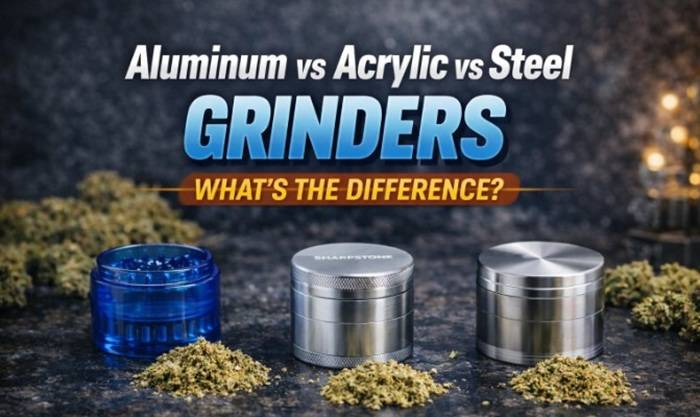
Material choice quietly determines how a grinder feels in the hand, how long it lasts, and how consistent the grind stays over time. While most grinders look similar at a glance, the material behind the machining changes durability, performance, and even the texture of the grind.
Acrylic Grinders: Lightweight and Budget-Friendly
Acrylic grinders are often the first type people encounter. They’re typically inexpensive, colorful, and easy to find.
Pros
- Very affordable
- Lightweight and portable
- Good entry-level option
Cons
- Teeth wear down quickly
- Static buildup can cause herb to stick
- Threads can strip or crack over time
Because acrylic is a softer plastic, the teeth gradually dull with use. Over time this can lead to uneven grinding and larger chunks slipping through. For occasional use, they work fine—but frequent users usually notice performance drop-offs within months.
Aluminum Grinders: The Industry Standard
Most mid-range and premium grinders are made from aircraft-grade aluminum. This material hits a balance between strength, weight, and precision machining.
Why aluminum dominates the market
- Resistant to rust and corrosion
- Strong but still lightweight
- Ideal for CNC machining precision
- Maintains sharp teeth longer
CNC-milled aluminum grinders are cut from a single block of metal, which keeps tolerances tight and threads smooth. This precision is one reason many users eventually move toward SharpStone weed grinders and similar manufacturers when upgrading to long-term gear.
Another advantage is thermal stability. Aluminum doesn’t retain heat the way steel can, which helps reduce sticking and resin buildup.
Stainless Steel Grinders: Built for Longevity
Steel grinders sit at the premium end of the spectrum. They’re heavier, extremely durable, and designed to last for years.
Pros
- Extremely durable and long-lasting
- Teeth stay sharp for extended periods
- Very smooth threading
- Resistant to dents and drops
Cons
- Much heavier than aluminum
- More expensive
- Can feel bulky for travel
Stainless steel grinders are often chosen by people who prioritize longevity over portability. Their weight provides a solid feel, but that same weight makes them less pocket-friendly.
Grinding Consistency and Material Strength
Material hardness directly affects grind consistency. Softer materials dull faster, which leads to tearing rather than cutting. Harder materials maintain sharp edges that shred evenly.
This affects:
- Airflow and burn consistency
- Flavor preservation
- Efficiency of material use
Even grinding increases surface area, which improves heat distribution and overall efficiency.
Threading and Long-Term Usability
Threading is one of the first parts of a grinder to fail. Plastic threads can warp or strip, while aluminum and steel threads maintain shape far longer. Smooth threading also prevents cross-threading and reduces frustration during daily use.
Weight, Portability, and Everyday Carry
Material choice also affects how often a grinder actually gets used.
- Acrylic → easiest to carry but least durable
- Aluminum → balanced for daily carry
- Steel → best for home setups and long sessions
Many people eventually choose aluminum because it offers the most practical balance between portability and lifespan.
Price vs Long-Term Value
Acrylic grinders cost less upfront but often need replacing. Steel grinders last the longest but come with a higher price and added weight. Aluminum sits in the middle, offering strong long-term value without sacrificing portability.
Understanding these differences helps explain why material choice plays such a big role in grinder performance and longevity.