

There are hundreds of photos on your phone: a child’s first time riding a bike, a weekend family get-together, a short but joyful trip. There are plenty of pictures, but they’re rarely looked through again.
In the past, turning those photos into a video usually meant spending time learning editing software, wrestling with complicated interfaces, or just putting it off. Many people tell themselves, “I’ll do it when I have time.” The truth is, that “when I have time” rarely comes.
In recent years, a new change has quietly entered everyday life. With Image-to-Video AI, static photos can be automatically organized and combined into a smooth, well-paced video. You don’t need to learn editing or understand complicated tech.
This article isn’t about how “advanced AI is.”
It’s about what ordinary families can do with AI video generation in everyday life.
What Is AI Video Generation?
Explaining “AI video generation” in everyday terms
Put simply, AI video generation means:
Turning the pictures you already have into a playable video.
You don’t need to shoot new footage or edit frame by frame. Just pick the photos, and the AI does most of the work—figuring out order, transitions, and even the overall rhythm.
When people first hear “Create AI Videos from Images,” they often assume it’s for professional creators.
But in reality, it addresses very everyday problems:
- Too many photos and no idea how to organize them
- Wanting something meaningful but not having time to learn new software
- Wanting to record life in a more vivid way
How It Works?
From a user’s perspective, the process is actually simple:
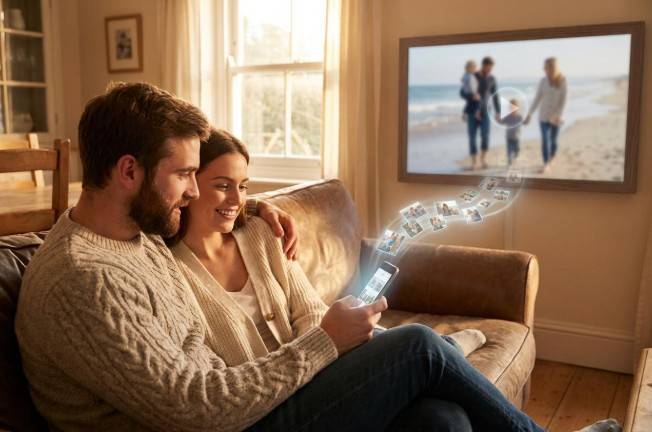
- Choose your material: pick photos from your phone or computer
- Hand them to the AI: the AI analyzes the images and their sequence
- Generate the video: it outputs a ready-to-share, savable video
The whole process feels more like “hiring an assistant who understands visual storytelling” than operating complicated tools.
Why It Matters for Everyday Life
For most families, time and energy are limited.
The importance of AI video generation isn’t the technology itself, but that it lowers the barrier to expressing and recording life.
You don’t need to be a creator, and you don’t need to aim for perfection.
If you have photos, you already have what it takes to get started.
How AI Video Generation Can Be Used Day-to-Day
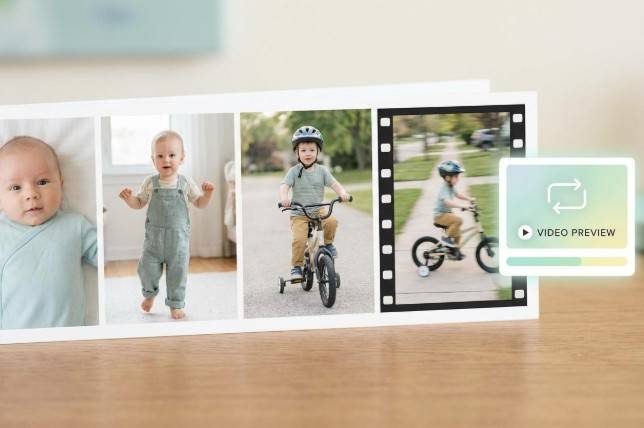
1. Record your child’s growth so it doesn’t just sit in the photo album
Many parents have hundreds or thousands of photos of their children on their phones.
Those photos are often scattered across time and rarely organized.
Previously, making a growth video meant learning editing or waiting for a “milestone,” and many precious moments remained buried in albums.
With an AI image to video generator, parents can simply gather photos from the same period and let the AI produce a short video.
No complicated design required—just a clear view of how the child changes over time.
2. Preserve a fuller memory of family gatherings or holidays
Birthdays, anniversaries, and holiday get-togethers usually generate lots of photos but rarely a dedicated video.
When you look back later, you’re left with still images that can’t fully capture the atmosphere.
By creating AI videos from images, you can turn those photos into a coherent sequence.
Not flashy—just a way to reconnect the emotions of the moment and make the memory feel three-dimensional.
3. Make travel memories easier to share with family and friends
After a trip, the common problem is: there are many photos, but it’s hard to convey what the journey was really like in one go.
AI video generation can organize travel photos in sequence to tell the story of the trip.
Even a few minutes of video convey the trip’s vibe far better than flipping through individual photos.
For people who aren’t comfortable telling stories, this is a more natural way to share their experience.
4. Make content easier for older relatives to understand and watch
In many families, there’s a clear “image generation gap.”
Younger people are used to swiping through albums or opening cloud links, while parents or grandparents are more familiar with — sitting on the couch and watching a video played from start to finish.
For them, individual photos often lack context:
What year was this? Who is this? Why does this photo look so different from the previous one?
With Image to Video AI, those scattered images can be organized into a coherent video.
Even a simple sequential playback fits their viewing habits better.
Many families find these videos actually spark more conversation:
Older relatives will pause to ask questions or share memories, rather than flipping through a few photos and moving on.
5. Capture meaningful life transitions with minimal effort
Many important moments in life aren’t accompanied by ceremonies or big celebrations.
Moving out for the first time, a child starting at a new school, or leaving a job are examples.
These milestones often pass quickly, and when you try to document them later, it’s hard to reconstruct the feelings and materials.
In the past, making a commemorative video felt like something that required emotional and technical preparation.
Now, with Create AI Videos from Images, as long as the photos exist, you can revisit those moments anytime.
This kind of record isn’t always for showing others — it’s often for yourself.
On a quiet evening, watching an automatically generated video can confirm: that period of life really happened.
6. Give a busy life an excuse to slow down
Many people don’t fail to record life out of disinterest — they simply don’t have the time.
Work, family, and daily chores easily push image organization to the bottom of the to-do list.
The point of AI video generation here isn’t to make people “do more,” but to let them do what they already wanted with less effort.
When organizing photos no longer requires several uninterrupted hours, recording life stops being a burden.
It becomes a small, gentle pause that lets you look back at what’s recently happened.
Tools That Support This Workflow
When tools step back, life steps forward.
In practice, the tools most accepted by ordinary families aren’t usually the ones with the most features.
Instead, tools with clear steps, an intuitive interface, and almost no learning curve are more likely to become part of everyday life.
Tools like MindVideo AI can be seen as an example of this workflow:
subtle in presence, yet able to help organize things when it matters.
For many users, the important thing isn’t “which tool I used,”
it’s “I finally turned these photos into a play-ready memory.”
Future Outlook of AI Video in Family Life
From the perspective of family life, the future of AI video generation looks more like a “built-in” capability.
Soon it may be common that:
- Short videos are automatically generated in the background as you take photos
- Family albums become collections of time- and topic-organized video clips rather than just images
- Recording life doesn’t require choosing special moments; it happens continuously
This doesn’t mean life will be overly recorded,
but that moments worth keeping won’t disappear simply because they’re too much trouble to preserve.
Conclusion
The value of technology often hides in the most ordinary daily moments
For most people, AI video generation isn’t an exciting new gadget,
but a tool that quietly changes the rhythm of everyday life.
When photos can naturally become videos and recording no longer requires professional skills,
life itself becomes easier to see, understand, and remember.
Years from now, when people look back at the footage organized by Image-to-Video AI,
they probably won’t remember the technology —
they’ll remember those utterly ordinary moments on screen.
And that is its truest value in family life.