



Many watches shaped history as we know it. But only a few carry the same revolutionary weight as the Seiko Quartz Astron. Seiko’s revolutionary quartz technology for watches in the 1960s marked a seismic shift in horological technology.
The change brought about by the Quartz Crisis was so great that it almost deemed the entire Swiss watchmaking industry obsolete. This shift continues to redefine accuracy and accessibility in the realm of watches. The legacy of the Seiko Quartz Astron is vital if we want to appreciate its significance and why its reemergence might be another sign that we are headed for another huge horological innovation.
Seiko and Quartz Technology: The Innovation that Shook the Watch World
Seiko unveiled the Quartz Astron 35SQ to the world on December 25, 1969. The holiday release of the world’s first commercially available quartz wristwatch is no ordinary feat. Unlike automatic wristwatches, the Astron 35SQ was powered by a 1.5V battery. It boasted an accuracy of ±5 seconds per month, a margin that was a hundred times more precise than standard mechanical watches of that era. This was the beginning of the Quartz Revolution.
Seiko’s innovation did more than set a new benchmark for watchmaking precision. It almost killed the entire industry. The Swiss watchmaking industry, which has set the standard for mechanical excellence and has a rich horological heritage, faced its doom when quartz technology enabled Seiko to produce highly accurate and precise watches at a fraction of the cost. The impact was so widespread that this era is often referred to as the Quartz Crisis in the history of Swiss watchmaking. However, for Seiko, it paved the way for global recognition, as the Seiko watch technology and ingenuity they revealed to the world meant that quality wristwatches can now be more accessible than ever.
How the Seiko Quartz Innovation Redefined the Brand’s Identity
The Astron name became synonymous with Seiko quartz innovation, symbolizing not just cutting-edge engineering but also the democratization of timekeeping. Where once fine watches were the domain of a privileged few, the Quartz Astron made precision available to the masses, without sacrificing elegance.
Seiko didn’t stop at revolutionizing accuracy; it laid the foundation for future-forward horology. From solar-powered movements to GPS-synchronized functionality, the Astron evolved as a flagship line that continually pushed boundaries.
The New Era: The Seiko Quartz Astron in the 21st Century
In 2012, Seiko revived the Astron GPS Solar line. Instead of simply paying homage and reissuing the classic Astron from 1969, Seiko introduced the world’s first GPS Solar watch, combining satellite connectivity with solar technology. This started the rebirth of the Astron line, further solidifying its legacy in Seiko’s timekeeping technology.
Modern Astron models are highly functional, yet sleek enough to meet today’s standards. These new Astron references set the time on their own, adjusting to time zones accordingly using GPS signals, and are entirely solar-powered. Some models include various complications, such as perpetual calendars and daylight saving adjustments, a far cry from the Astron’s beginnings as the first quartz watch readily available to the public.
The Seiko Astron SSH159J1: Sporty, Dressy, Precise, And Sophisticated
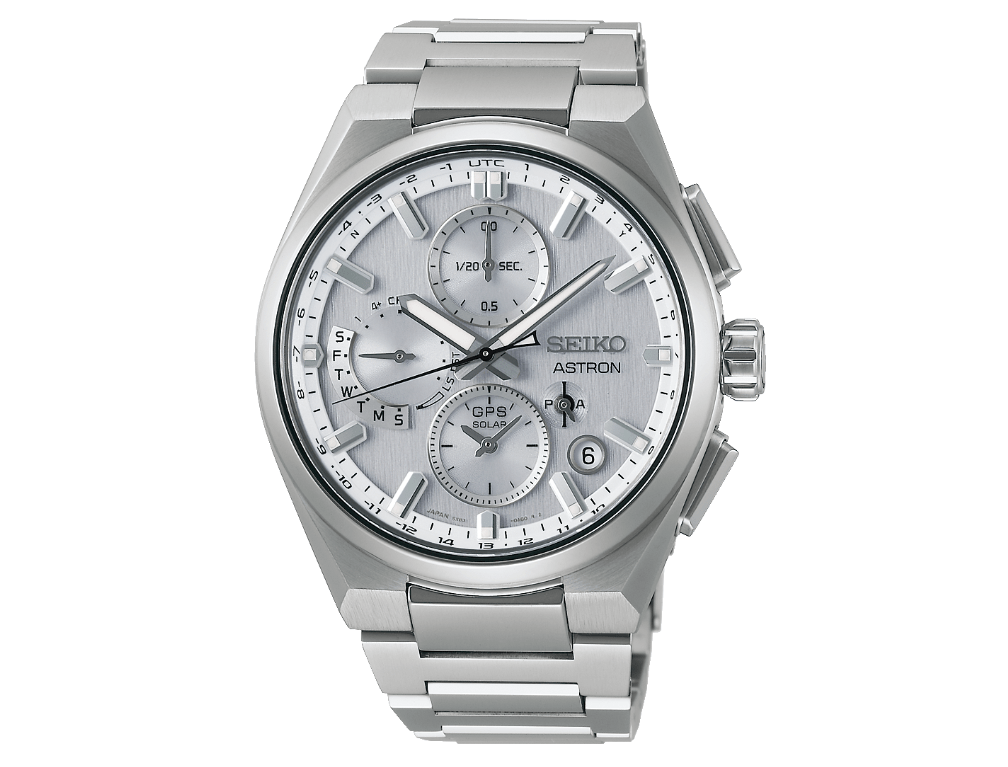
The Seiko Quartz SSH159J1 is one of the modern classic references of the Astron line. This sporty quartz watch features a titanium case with a super-hard coating, making it both light and robust. It features a brushed silver dial, with the subdials boasting a sunburst finish for enhanced visual contrast. The SSH1591 features the Caliber 5X83 GPS solar movement. It includes numerous complications, such as a chronograph, a perpetual calendar up to the year 2100, world time functionality, and automatic time synchronization and setting.
All of these complications, combined with a sporty case with an integrated bracelet and modern proportions, make the Seiko SSH159 one of the best examples to showcase numerous Seiko accuracy milestones from a different perspective.
The Seiko Astron SSH161J1: A Striking Fusion of Precision and Design
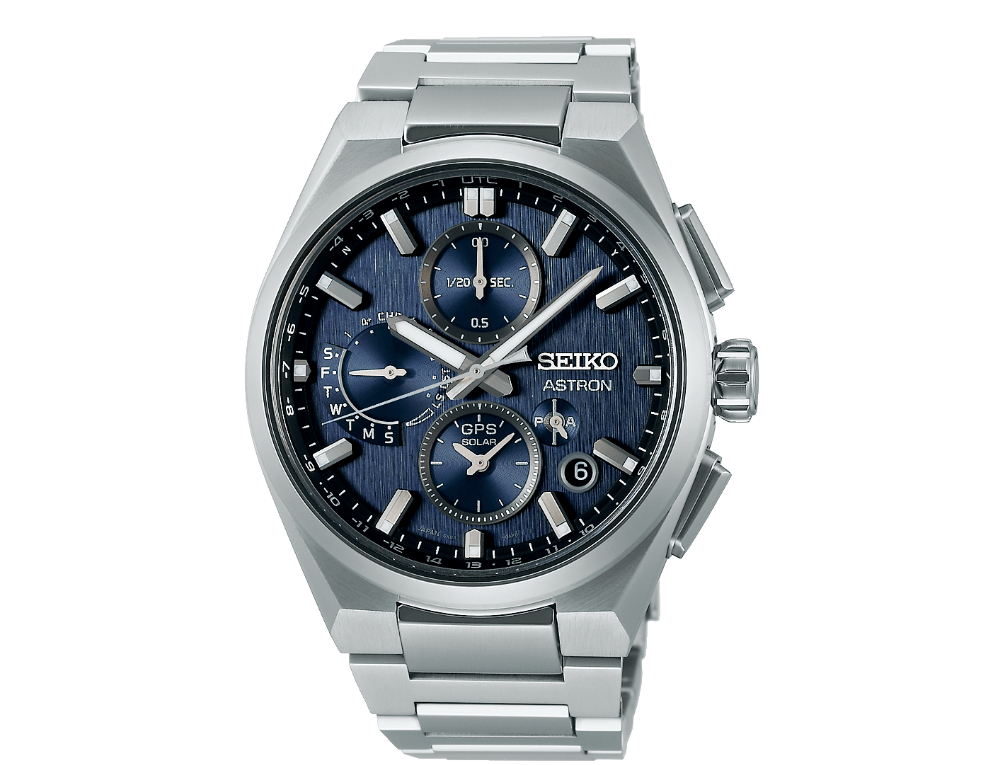
The Seiko Astron SSH161J1, also known as the “Infinite Blue,” is another statement piece in the new Astron GPS Solar collection. Similar to the SSH159 mentioned earlier, the SSH161 also features a super-hard-coated titanium case, providing a robust yet lightweight feel. The vivid blue dial contrasts well with the muted finish of its titanium case. It maintains the sharp markers and luminous hands for better legibility as well. The watch features a 42mm case, providing wrist presence without being too noticeable.
The SSH161 is also powered by the Caliber 5X83 GPS solar movement, featuring a dual-time display, full chronograph, and perpetual calendar complications, as well as GPS-based automatic time adjustment. The integrated bracelet and sporty aesthetic blend seamlessly with the rest of the SSH161’s capabilities, making it a capable everyday watch.
The Seiko Astron SSH109J1: Sleek, Smart, and World-Ready
The Seiko Astron SSH109J1 is another classy yet capable timepiece in the Astron range. The watch features a blue-grey dial, while the subdials have a black sunray color. The markers and dauphine hands all have lume for better legibility in low-light conditions. The case is also made of titanium with a super-hard coating for maximum durability and features an integrated bracelet, providing a sporty and dressy aesthetic for daily wear.The SSH109 is powered by the Caliber 5X53 GPS solar movement, allowing for automatic GPS time synchronization, world time adjustment, and perpetual calendar complications. The slim case profile and the subtle yet functional design cues make the SSH109 an elegant timepiece for modern travelers and everyday use.
The Seiko Astron SSH175J1: A Bold Evolution in Astron Chronograph Design
The Seiko Astron SSH175J1 is the current flagship model for the Astron line. At first glance, it sports that sporty and technical aesthetic, thanks to its numerous markers and subdials. The SSH175 features a large 44.1mm titanium case, a curved sapphire crystal, and a sapphire bezel insert. The dial has multiple layers, with the subdials having contrasting sunray colors for legibility and added visual interest.
The SSH175 runs on the Caliber 5X83 GPS solar movement, offering a 1/20-second chronograph, dual-time zone tracking, GPS time syncing, a perpetual calendar, and daylight saving time adjustment, all in one. If you want to experience the full capabilities of the latest Astron line, the SSH175 is the perfect timepiece to take advantage of Astron’s GPS technology and timeless design.
The Timeless Relevance of the Seiko Astron
The Astron continues to stand out in a sea of smartwatches and luxury automatic timepieces, as it embodies a philosophy of evolution. The purpose of the Astron when it was first unveiled was to revolutionize watchmaking by aiming to keep the most accurate time at a fraction of the cost. This engineering with a purpose revolutionized the entire landscape of the watch industry, driving it to evolve and innovate.
The Seiko Quartz Astron is a historical milestone in the watch world and a testament to Seiko’s legacy in horological innovation and accessibility. The Astron remains Seiko’s significant contribution to modern watchmaking, with its relentless pursuit of precision and innovation, and breaking the stigma of quartz watches being undesirable. If anything, they should be more desirable after all the innovation that’s still being put into it.
Whether you’re looking for a luxury quartz watch to be part of your unique collection or just want to have a reliable timepiece around your wrist, you can never go wrong with the Seiko Astron.