

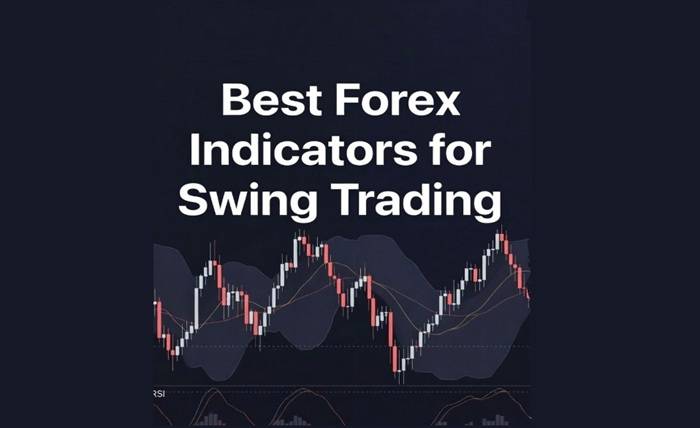
Swing trading picks up steam again as markets chop less and trend more in current conditions. Traders hold positions from a few days to weeks, catching medium-term swings on H4 to D1 charts. The goal is 50-200 pips per trade with controlled risk, avoiding the noise of scalping and long waits of position trading. Success hinges on indicators that spot trend direction, momentum shifts, and reversal points without lagging too much.
I have swung forex pairs for years, through ranging slogs and clean impulses. No single indicator rules, but a smart mix of trend, momentum, and volume tools filters signals and boosts edge. This guide covers the strongest ones for swing trading, exact setups I use, powerful combinations, real examples from majors, and risk rules that keep drawdowns tiny. All evergreen, tested across regimes, ready for your charts.
Why Swing Trading Needs the Right Indicators
Swing trading lives in the sweet spot between short-term noise and long-term fundamentals. Indicators cut through daily wiggles to reveal multi-day momentum. Trend tools confirm bias, oscillators time entries on pullbacks or reversals, volume validates strength.
Without them, you chase price blindly. I learned this early: ignored divergence once, entered against weakening trend, watched 120-pip winner turn into 80-pip loser. Proper tools give confluence: price at support + oscillator oversold + volume pickup = high-probability long.
Key: match indicator to timeframe. H4-D1 needs smoother settings than M15. Avoid overload; 2-3 complementary types outperform ten similar ones.
Top Indicators for Swing Setups
From practical use, EMA/SMA, Bollinger Bands, Parabolic SAR, RSI, MACD, Stochastic, and OBV stand out for swing forex. EMA catches trend shifts fast, Bollinger spots volatility squeezes, Parabolic trails stops, RSI/MACD/Stochastic time momentum, OBV confirms participation.
Here is a side-by-side look at how they perform in swing contexts on majors like EURUSD or GBPUSD.
| Indicator | Type | Best Timeframe | Key Settings Example | Primary Signal | False Signal Risk | Swing Use Case |
| EMA/SMA | Trend | H4-D1 | 50/200 EMA or 13/8/5 Alligator | Crossover or price vs MA | Low in trends | Trend bias + pullback entries |
| Bollinger Bands | Volatility/Trend | H4-D1 | 20 SMA, 2 dev | Squeeze breakout or band touch | Medium | Volatility expansion + mean revert |
| Parabolic SAR | Trend/Trailing | H4-D1 | Step 0.02, Max 0.2 | Dots flip + Three Points Rule | Medium | Trailing stops + reversal confirm |
| RSI | Momentum | H4-D1 | Period 14, 70/30 or 80/20 | Divergence or zone exit | Medium | Overbought/oversold timing |
| MACD | Momentum | H4-D1 | 12,26,9 | Line cross + histogram + divergence | Medium-High | Momentum shift + strength check |
| Stochastic | Momentum | H4-D1 | 14,3,2003 | %K/%D cross in zones | High alone | Oversold bounce in uptrend |
| OBV | Volume | H4-D1 | N/A | Divergence with price | Low | Trend confirmation or reversal |
EMA stacks (like Alligator) often anchor the system for direction.
Building Winning Combinations
Simple combos beat complexity. Use EMA for trend, RSI/MACD for timing, OBV for confirmation. Example: uptrend (price above 50/200 EMA), RSI exits oversold near 50 EMA pullback, OBV rising = long entry.
Alligator + RSI: buy when jaws open up (fast MAs cross slow upward), RSI >30 and rising. Add Bollinger squeeze: wait for bands tight, then breakout in trend direction.
Filter false signals: require volume increase on breakout, avoid entries near major news unless hedging. In my sessions, adding OBV divergence cut losers by 30%.
Real-World Swing Examples and Risk Rules
On EURUSD D1 last range-to-trend shift: price pulled to 50 EMA at 1.0850, RSI showed bullish divergence (higher lows), MACD histogram flipped positive. Entered long at 1.0870, stop below EMA 1.0820 (-50 pips), target 1.1020 (+150 pips). RR 1:3. Closed +130 pips in 8 days.
GBPUSD H4 breakout: Bollinger squeeze resolved up, Stochastic crossed out oversold, OBV new high. Entered 1.3125, stop 1.3050 (-75 pips), target 1.3350 (+225 pips). RR 1:3.
Risk 0.5-1% per trade. $25k account, 1% = $250 max loss. Pip value $10/standard lot, stop 80 pips → size 0.3 lots ($250 / 80 = $3.125/point). Use ATR for dynamic stops (1.5×ATR). Expectancy: 55% win rate, avg 2.2R win / 1R loss → +0.71R per trade. Positive = profitable long-term.
Never average losers. Log trades, review expectancy monthly.
Conclusion
Swing trading thrives when you use indicators that align trend, momentum, and volume confirmation. EMA/SMA sets direction, RSI/MACD/Stochastic times entries, Bollinger/Parabolic handles volatility and trailing, OBV validates real participation. Combine 2-3 for confluence, filter with price action and volume, rotate based on regime.
The real edge is consistency: strict sizing, hard stops, no revenge trades. Demo refine setups, track stats, adjust for volatility spikes. Protect capital first, profits follow. For detailed breakdowns, settings, strategies, and pitfalls on these indicators tailored to swing trading, check this in-depth guide: best forex indicators for swing trading. It gives you the full toolkit to capture those multi-day moves effectively. Stay patient, trade smart, and swings turn into steady gains.