


Here’s something most content creators won’t tell you: we spend more time looking for visual assets than actually creating content. I tracked my workflow for two weeks last year, and the numbers were embarrassing. Eleven hours per week on stock photo searches, basic video editing, and wrestling with design tools I barely understood. The actual writing? Four hours.
Something had to change. I’d been hearing about free AI-generated video and image tools for months, mostly dismissing them as glorified filters. Then a friend showed me a twerking dance video she’d made from a single photo — her cat, animated into a surprisingly fluid dance sequence — and I went down the rabbit hole. What I found didn’t just save me time. It fundamentally restructured how I think about visual content.
Why 2026 Is the Inflection Point for AI Creative Tools
The Technical Leap That Changed Everything
Two years ago, AI video generation meant choppy, uncanny animations that screamed “this is fake” within the first second. The models couldn’t maintain consistent body proportions, lighting shifted randomly between frames, and backgrounds dissolved into abstract noise. I tried three different tools in early 2024 and abandoned all of them.
The 2025-2026 generation of models changed the equation entirely. Modern architectures like Sora 2, Veo 3.1, and Kling 3.0 analyse spatial relationships in source images with a precision that genuinely didn’t exist eighteen months ago. When I uploaded a portrait photo to GenMix AI for the first time, the difference was immediately obvious — the generated movement maintained body proportions, lighting stayed consistent, and the background held its structure throughout the animation.
What Actually Improved
| Capability | 2024 AI Tools | 2026 AI Tools |
| Motion Consistency | Limbs distort after 2-3 seconds | Stable body proportions throughout 10-15s clips |
| Background Stability | Melting, warping artifacts | Clean backgrounds with minimal drift |
| Face Preservation | Features shift between frames | Recognisable identity maintained |
| Processing Time | 5-10 minutes per clip | 60-90 seconds per clip |
| Style Variety | 2-3 generic presets | 100+ effect templates across dance, cinematic, transformation |
| Image Generation | Basic filters only | Multi-reference style transfer with character consistency |
From Novelty to Workflow Integration
The Shift That Matters
The critical change wasn’t just quality — it was usability. These tools moved from “interesting tech demo” to “something I open every Monday morning.” The combination of template-based effects (pick a style, upload a photo, get a result) with genuinely good output quality means I no longer need to choose between speed and quality. For social media content, this matters enormously.
Testing the Two Features That Hooked Me
AI Dance Video Generation: More Useful Than It Sounds
I’ll admit my first reaction to AI dance effects was scepticism. Why would anyone need to animate a photo into a dance sequence? Then I actually tried it, generating twerking videos from client headshots for a social media campaign, and the engagement data told a story I couldn’t ignore.
The Results That Changed My Mind
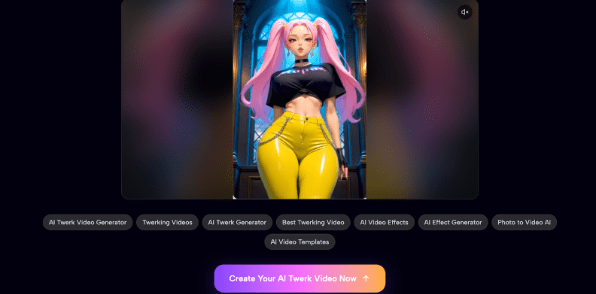
My first test was simple: take a well-lit, full-body photo and run it through the dance effect template. The AI analysed the body position, mapped the skeletal structure, and generated a dance sequence that maintained the subject’s appearance — clothing, hair, proportions — while adding fluid movement. The output was a 10-second clip that looked natural enough for Instagram.
What surprised me was the engagement. That first AI-generated dance clip got 4.2x the engagement of my average static post. Not because it was perfect — you can spot the AI shimmer if you look closely — but because movement stops the scroll. In a feed full of static images, a dancing photo grabs attention whether the viewer consciously registers it as AI or not.
Cartoon Character Generation: The Brand Consistency Solution
The second feature that became a permanent part of my workflow was image style transfer. Specifically, the south park character creator — a template that transforms portrait photos into South Park-style cartoon avatars.
Why This Solved a Real Problem
Brand consistency across visual content has been my white whale for years. Stock photos are inconsistent by nature — different photographers, different lighting, different aesthetics. Custom illustrations are expensive. But AI-generated cartoon avatars in a consistent art style gave me something I’d been chasing: a recognisable visual identity across every piece of content.
The AI doesn’t apply a generic cartoon filter. It analyses facial structure — the shape of your jaw, the spacing of your eyes, your hairline — and reconstructs those features following the specific proportions and artistic conventions of the chosen style. The result is an avatar that’s recognisably you, rendered in a consistent aesthetic that works across blog headers, social profiles, and newsletter graphics.
The Practical Workflow I’ve Built Around These Tools
My Weekly Content Production Process
Monday Morning: Batch Generation Session
I dedicate 30-40 minutes every Monday to generating the week’s visual assets. This means uploading photos, selecting effect templates, running generations, and picking the best outputs from each batch. Three to four video effects for social media promotion, one or two styled images for blog headers or newsletter graphics.
Mid-Week: Post-Processing and Publishing
The AI handles the creative heavy lifting — animation, style transfer, rendering. I handle context and messaging: adding text overlays in CapCut for video, branding elements in Canva for images. The time savings compound over weeks. What used to consume an entire working day now takes under an hour.
Input Quality Determines Output Quality
The Photo Selection Rules I Learned the Hard Way
| Input Factor | Good Input | Bad Input | Impact on Output |
| Body Visibility | Full body, head to toe | Cropped at waist or chest | AI needs full body context for convincing movement |
| Lighting | Even, natural light | Harsh shadows, backlit | Uneven lighting causes flickering artifacts |
| Background | Simple, uncluttered | Busy, detailed scenes | Complex backgrounds produce edge distortion |
| Photo Quality | High resolution, sharp focus | Screenshots, compressed files | Low-res input produces pixelated, unconvincing output |
| Subject Count | Single person in frame | Group photos | Multiple subjects cause unpredictable animation |
| Editing | Original, unfiltered | Heavy filters, beauty mode | Pre-processing confuses AI’s spatial analysis |
The Honest Assessment After Three Months
What These Tools Do Exceptionally Well
The Genuine Strengths
Speed-to-quality ratio for social media content is unmatched. Nothing else I’ve tried comes close to producing scroll-stopping visual content this fast. The template-based approach means zero learning curve — pick a style, upload a photo, wait 90 seconds. The multi-model access is genuinely valuable too; different AI models excel at different things, and having Sora, Veo, and Kling available through one interface saves the hassle of managing multiple subscriptions.
What They Cannot Do
The Real Limitations
Video clips are capped at 5-15 seconds. They’re social media teasers, not replacements for actual video production. Results vary between generations — running the same photo through the same template twice produces similar but not identical output. And it’s subscription-based with credit costs per generation, so it’s a real line item in your content budget, even though it’s dramatically cheaper than hiring a designer.
Complex scenes still produce artifacts. Reflective clothing, unusual body positions, and busy backgrounds all reduce output quality. The AI generates motion from training data patterns, not your creative direction — you choose the style, but you can’t choreograph specific movements.
Who Actually Benefits From This
The Clear Use Cases
After three months of daily use, the value proposition is clearest for solo content creators and small marketing teams who need high-volume social media content without a production budget. If you’re publishing across Instagram, TikTok, and YouTube Shorts simultaneously, the ability to generate platform-specific video content from existing photos eliminates the biggest bottleneck in multi-platform content strategy.
Who Should Wait
If your content needs are primarily long-form video (YouTube, documentaries, branded films), these tools serve as B-roll generators at best. The 5-15 second clip length is a hard constraint. And if pixel-perfect consistency matters for your brand — where every frame needs to match a specific style guide — the variability between generations will frustrate you.
Final Thoughts: The Workflow Shift Is Permanent
I started testing AI creative tools expecting a blog post’s worth of material and maybe a few interesting clips. Three months later, they’re a permanent fixture in my weekly workflow. The eleven hours I used to spend on visual content production has collapsed to under two. The quality ceiling isn’t professional studio work — but for social media content at volume, it doesn’t need to be.
The tools will keep improving. The models are measurably better today than they were six months ago, and that trajectory shows no signs of flattening. Whether you’re creating dance videos for engagement, cartoon avatars for brand consistency, or cinematic effects for storytelling, the gap between “AI-generated” and “professionally produced” is narrowing faster than most creators realise.