


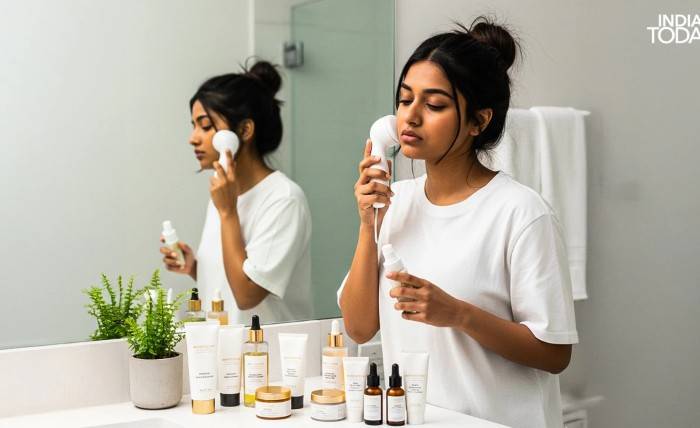
The skincare industry has never offered more products, trends, and beauty advice than it does today. From multi-step routines to highly concentrated active ingredients, consumers are constantly encouraged to upgrade, replace, or expand their skincare collections. Yet despite this abundance, many people continue to struggle with irritation, dehydration, sensitivity, and unstable results.
For many consumers, skincare has become less about maintaining healthy skin and more about managing recurring problems. One week a product seems effective, while the next week redness, dryness, or breakouts return again. The constant switching between trending serums, exfoliants, and treatments often leaves people frustrated and unsure about what their skin actually needs.
According to Female First, this growing dissatisfaction is one of the reasons why Japanese-inspired skincare philosophies are gaining more attention internationally. Instead of focusing on aggressive correction, the J-beauty approach prioritizes prevention, balance, hydration, and long-term skin stability.
The founder of Active Drip experienced these struggles firsthand. After developing psoriasis at the age of 13, she spent years experimenting with different products and skincare routines in search of lasting improvement. Although some treatments appeared to help temporarily, the results rarely remained stable. The skin would improve for a short period before irritation and imbalance returned again.
This experience eventually led to a broader question: why do many skincare products provide only temporary effects instead of helping the skin remain consistently healthy? That search for answers later influenced the philosophy behind Active Drip.
A turning point came after moving to Japan at the age of 18. There, skincare culture introduced a noticeably different mindset. Instead of relying on intense treatments or complicated layering systems, Japanese beauty routines often focus on maintaining the skin barrier and supporting the skin gradually over time.
In Japan, skincare products are frequently designed with long-term consistency in mind. Formulations tend to be lighter, more balanced, and less aggressive compared to many Western products that emphasize fast, visible transformation. The idea is not to force dramatic changes overnight but to create conditions where the skin can stabilize naturally.
Another important element of J-beauty is the use of fermentation and enzyme-based technologies. Ingredients such as fermented rice, beans, and botanical extracts are commonly used not only for hydration but also to improve how active ingredients interact with the skin. Fermentation can help break ingredients into smaller compounds that are easier for the skin to absorb while reducing the risk of irritation.
Although fermentation-based skincare has existed in Japan for many years, it is still relatively new for many Western consumers. In recent years, however, interest in these formulations has increased as people search for gentler alternatives to highly aggressive skincare treatments.
Hydration and barrier support remain central to this philosophy. According to many dermatologists and skincare experts, a weakened skin barrier can contribute to redness, irritation, dryness, and increased sensitivity. When the barrier becomes damaged, even effective ingredients may stop working properly because the skin struggles to retain moisture and protect itself from external stressors.
This explains why more beauty brands are now shifting attention toward repairing and maintaining the barrier instead of constantly introducing stronger exfoliants or harsher active ingredients. In many cases, consumers are beginning to simplify their routines rather than adding more products.
Active Drip built its skincare line around these principles. The brand combines Japanese-inspired formulation methods with European laboratory development, focusing on products that support hydration, reinforce the skin barrier, and deliver active ingredients in a more sustainable way. Instead of promoting overly complex routines, the company emphasizes minimalism and multifunctional products.
The brand also highlights another growing topic in the beauty industry: the connection between internal health and skin condition. Stress, sleep quality, digestion, and nutrient absorption can all influence how the skin behaves. As a result, many skincare companies are now expanding into wellness and supplement categories designed to support skin health from within.
This broader shift reflects changing consumer attitudes toward beauty. More people are becoming cautious about overusing acids, retinoids, and strong exfoliating products after experiencing irritation or long-term sensitivity. Consumers increasingly prefer routines that feel manageable, calming, and sustainable instead of constantly chasing dramatic short-term results.
The growing popularity of J-beauty philosophies shows how skincare trends are evolving. Rather than viewing skincare as a process of continuously correcting flaws, many consumers are beginning to see it as a form of long-term maintenance and prevention. Stability, hydration, and skin resilience are becoming more important than aggressive transformation.
In the end, this approach suggests that healthier skin may not come from using more products, but from using products more thoughtfully.